Strong bones: exercises to prevent osteoporosis
Physical Activity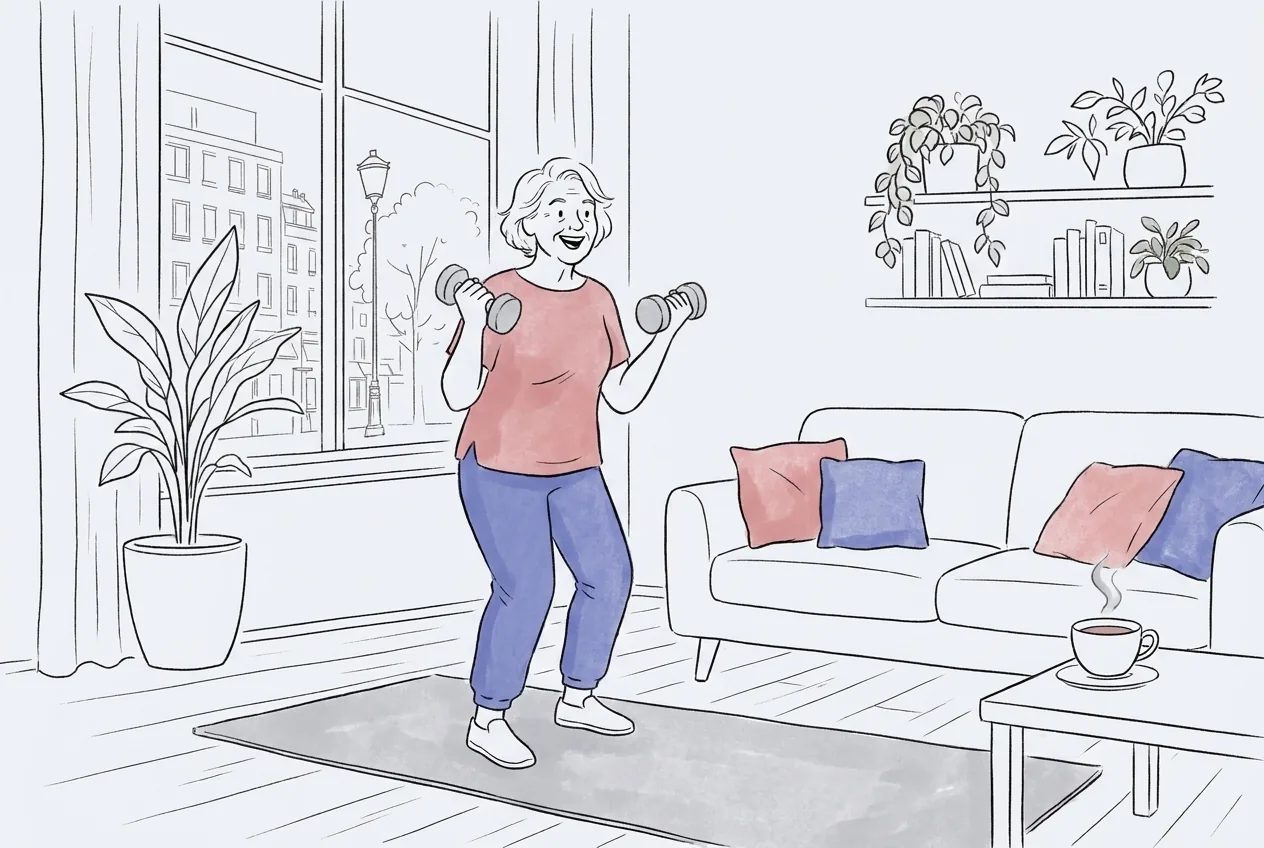
Key points
- In a trial, strength plus impact training improved spine and hip bone density.
- Training was supervised and caused no serious injuries.
- Balance exercises reduce falls by 24% to 34%.
- Walking helps, but bones also need strength training.
What the research shows
LIFTMOR. In this Australian randomized trial, 101 postmenopausal women with low bone mass did either supervised high-intensity resistance and impact training (deadlifts, overhead presses, squats and jumping chin-ups with drop landings) or a low-intensity home program twice a week for 8 months. The high-intensity group improved bone density at the spine and hip, as well as height and physical function, with no serious injuries (Watson et al., 2018).
Falls. A Cochrane review of 108 randomized trials found that exercise programs, especially those combining balance and functional training, reduced the rate of falls in older adults by about a quarter, and programs with several types of exercise by about a third (Sherrington et al., 2019).
Supplements are not enough. A meta-analysis of 81 trials found that vitamin D did not prevent fractures or falls (Bolland et al., 2018).
In practice
- Strength training for the legs, hips and back 2 to 3 times a week.
- Some impact if your doctor agrees: stair climbing, jumping, brisk walking with hills.
- Balance work: standing on one leg, heel-to-toe walking, tai chi.
- Get enough protein and calcium, avoid smoking and limit alcohol.
Frequently asked questions
Is it safe to lift weights with osteoporosis?
Supervised, progressive strength training was safe in trials, but technique matters. Start with a physical therapist or qualified trainer.
Which exercises are best for bones?
Resistance training (squats, deadlifts, overhead presses), impact exercise such as jumping or stair climbing, and balance training such as tai chi.
Sources
- Watson et al. (2018). High-Intensity Resistance and Impact Training Improves Bone Mineral Density and Physical Function in Postmenopausal Women With Osteopenia and Osteoporosis: The LIFTMOR Randomized Controlled Trial. Journal of Bone and Mineral Research 33(2):211-220. doi:10.1002/jbmr.3284
- Sherrington et al. (2019). Exercise for preventing falls in older people living in the community. Cochrane Database of Systematic Reviews 2019(1). doi:10.1002/14651858.CD012424.pub2
- Bolland et al. (2018). Effects of vitamin D supplementation on musculoskeletal health: a systematic review, meta-analysis, and trial sequential analysis. The Lancet Diabetes & Endocrinology 6(11):847-858. doi:10.1016/S2213-8587(18)30265-1
Keep reading
"Weekend warriors": is exercising only on weekends good for you?
What a study of more than 63,000 adults found about getting all your weekly exercise in one or two sessions, and why sitting still matters.
 Physical Activity
Extreme heat and health: how to avoid overheating
Who is most at risk during heat waves, the signs of heat stroke and what really cools you down: fans, water, shade and changing your schedule.
 Physical Activity
Walking after meals: an easy way to lower blood sugar
Why short walks after eating help control blood sugar, what studies in people with prediabetes found and how to build the habit.
Related topics from other pillars
 Nutrition
Vitamin D: who really needs supplements?
What the VITAL trial and a meta-analysis of 81 randomized trials found about vitamin D supplements, and who may still need them.
 Stress
Tai chi: gentle movement for body and mind
What a BMJ randomized trial found about tai chi for fibromyalgia, how tai chi improves balance and cognition in older adults and how to get started.
 Nutrition
Milk and dairy: how much do adults really need?
What a New England Journal of Medicine review says about the three-cups-a-day advice, dairy and fractures, and how to get calcium if you skip dairy.
Physical Activity tools
IPAQ: International Physical Activity Questionnaire (short)
Calculates your MET-minutes per week and your activity level.
QuizDo you meet the Physical Activity Guidelines? Check
Minutes of moderate and vigorous activity per week, plus strength training.
Quiz30-second chair stand test (for adults 60+)
How many times can you stand up from a chair in 30 seconds? Compared with CDC norms.
PDF · TrackerMonthly step tracker
Write down your daily steps and track your progress.
PDF · Log15-minute home strength workout + training log
A no-equipment routine with an 8-week rep log.
PDF · Card + trackerBalance exercises for adults 60+
A safe balance and leg-strength routine with a 4-week tracker.