Tai chi: gentle movement for body and mind
Stress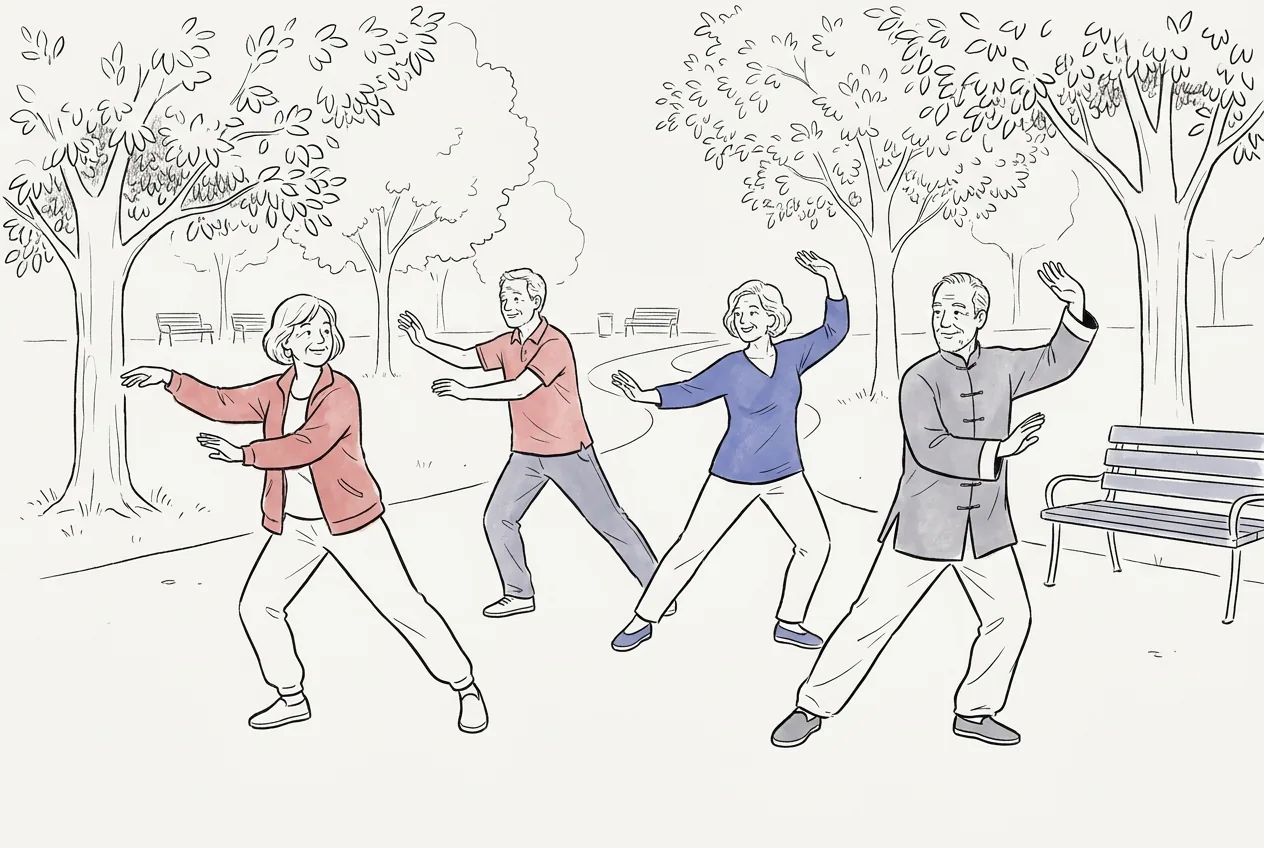
Key points
- BMJ trial: tai chi was at least as good as aerobic exercise for fibromyalgia.
- Twice a week for 24 weeks gave the largest effect.
- It improves balance and cognitive function in people over 50.
- It is gentle and suits many ages and fitness levels.
What the research shows
Fibromyalgia. In a randomized trial at Tufts Medical Center, 226 adults with fibromyalgia did tai chi or supervised aerobic exercise for 24 weeks. Tai chi produced similar or greater improvement in symptoms, and the greatest benefit came with twice-weekly sessions for 24 weeks (Wang et al., 2018).
Cognition. A meta-analysis found that exercise, including tai chi, improved cognitive function in adults over 50 (Northey et al., 2018).
Balance and falls. In a Cochrane review, exercise programs including tai chi reduced falls in older adults (Sherrington et al., 2019).
How to start
- Find a beginner class with a qualified instructor.
- Practice 2 to 3 times a week.
- Move slowly and within your comfort range.
Frequently asked questions
Do I need special equipment?
No. Comfortable clothes and flat shoes are enough.
Where can I find a class?
Community centers, senior centers, YMCAs and hospitals often offer tai chi, including the evidence-based "Tai Ji Quan: Moving for Better Balance" program.
Sources
- Wang et al. (2018). Effect of tai chi versus aerobic exercise for fibromyalgia: comparative effectiveness randomized controlled trial. BMJ :k851. doi:10.1136/bmj.k851
- Northey et al. (2018). Exercise interventions for cognitive function in adults older than 50: a systematic review with meta-analysis. British Journal of Sports Medicine 52(3):154-160. doi:10.1136/bjsports-2016-096587
- Sherrington et al. (2019). Exercise for preventing falls in older people living in the community. Cochrane Database of Systematic Reviews 2019(1). doi:10.1002/14651858.CD012424.pub2
Keep reading
Social support as a buffer against stress
What the classic stress-buffering hypothesis says, how perceived support protects health and why asking for help is a skill.
StressPerfectionism: when striving for perfect hurts
What a meta-analysis of more than 40,000 college students found about rising perfectionism, how it is linked to anxiety and depression and why self-compassion helps.
StressOptimism and health: what studies show
What a meta-analysis of 15 studies with 229,000 people found about optimism, heart disease and mortality, and how optimism can be practiced.
Related topics from other pillars
 Physical Activity
Exercise after 60: strength, balance and fall prevention
Why strength and balance matter most after 60, what a Cochrane review found about exercise and falls and a safe home routine to get started.
 Physical Activity
Stretching: benefits, myths and how to do it right
Does stretching prevent injuries? What a systematic review found about static stretching, performance and injury risk, and how to warm up properly.
 Physical Activity
Exercise during pregnancy: safe and beneficial
How much physical activity is recommended during pregnancy, how it lowers the risk of gestational diabetes and preeclampsia, and how to stay active safely.
Stress tools
PHQ-9: depression screening questionnaire
9 questions about your mood over the past 2 weeks, one of the most widely used screening tools in the world.
QuizGAD-7: anxiety screening questionnaire
7 questions about anxiety over the past 2 weeks.
QuizWHO-5 Well-Being Index
5 statements about how you have been feeling over the past 2 weeks.
PDF · TrackerMonthly mood, energy and sleep tracker
Rate your mood, energy, anxiety and sleep daily on a 1–5 scale.
PDF · CardBreathing techniques card
Step-by-step instructions for cyclic sighing, slow breathing and box breathing.
PDF · CardProgressive muscle relaxation: step by step
A guide to 9 muscle groups to practice before bed.