Knee osteoarthritis: exercise is the foundation of treatment
Physical Activity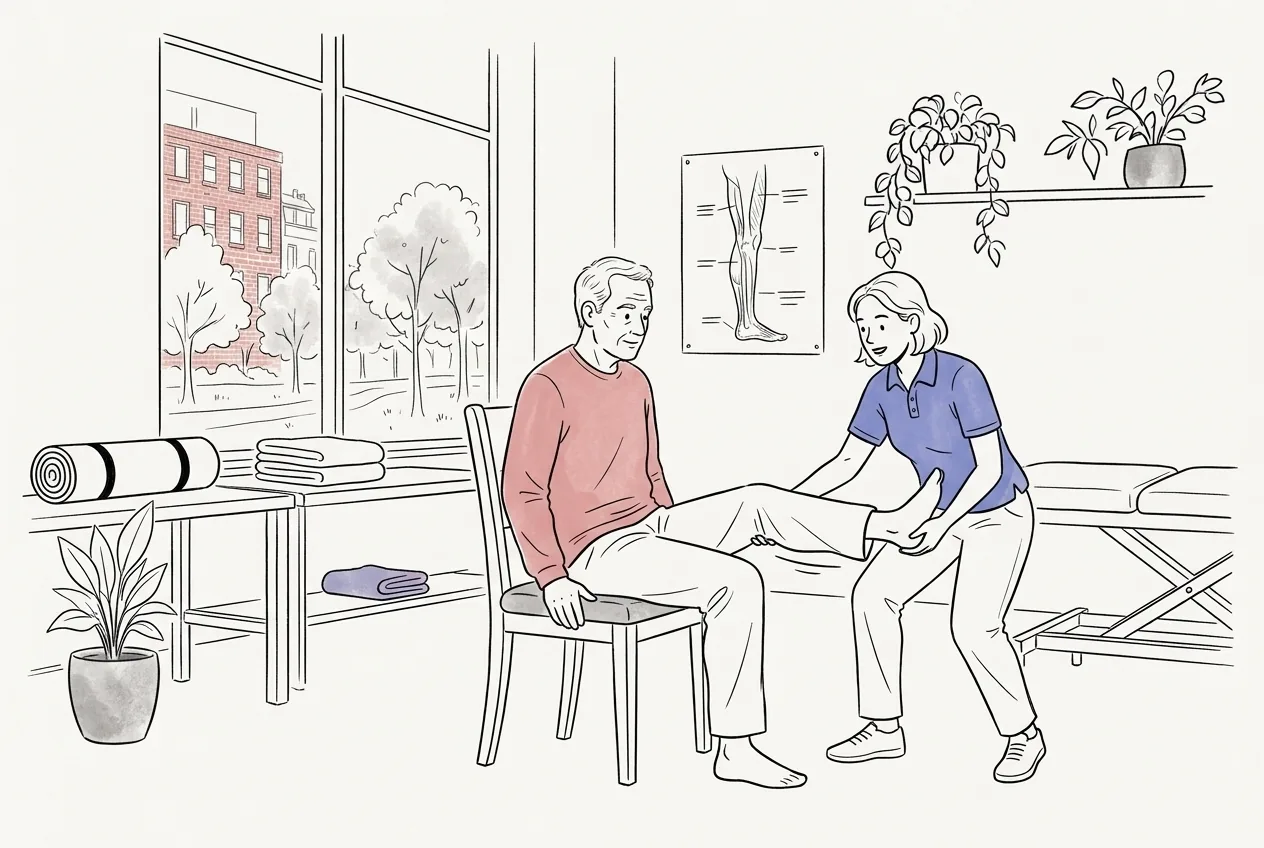
Key points
- Cochrane: exercise reduces pain and improves function in knee osteoarthritis.
- The effect lasts 2 to 6 months after the program.
- A nonsurgical program (exercise, education, weight management) helped substantially.
- Movement does not "wear out" the joint; it strengthens the muscles around it.
What the research shows
Cochrane review. Pooling 54 randomized trials, the review found high-quality evidence that land-based therapeutic exercise reduces knee pain and improves physical function, and moderate-quality evidence for better quality of life. The benefits were sustained for at least 2 to 6 months after treatment ended (Fransen et al., 2015).
Surgery versus nonsurgical care. In a Danish randomized trial, 100 patients eligible for total knee replacement received either surgery followed by nonsurgical treatment or nonsurgical treatment alone (supervised exercise, education, diet advice, insoles and pain medication). Surgery led to greater improvement, but the nonsurgical group also improved substantially, and only about a quarter of them went on to have surgery within a year (Skou et al., 2015).
Guidelines for musculoskeletal pain emphasize education and exercise as first-line care (Foster et al., 2018). The American College of Rheumatology strongly recommends exercise for knee osteoarthritis.
Knee exercises
- Quad sets: sitting with the leg straight, tighten the thigh and hold for 5 seconds, 10 times.
- Straight-leg raises: lying down, lift the straight leg about 12 inches, 10 times.
- Sit-to-stand from a chair.
- Step-ups on a low step.
- Stationary cycling or swimming for low-impact cardio.
A physical therapist can tailor a program to your knees.
Frequently asked questions
Will exercise make my arthritis worse?
No. Appropriate exercise does not speed up joint damage and usually reduces pain. Some discomfort during exercise is acceptable if it settles within 24 hours.
Does weight loss help knee pain?
Yes. Each pound of weight lost reduces the load on the knee by several pounds with every step, and guidelines recommend weight loss for people with overweight.
Sources
- Fransen et al. (2015). Exercise for osteoarthritis of the knee. Cochrane Database of Systematic Reviews 2015(1). doi:10.1002/14651858.CD004376.pub3
- Skou et al. (2015). A Randomized, Controlled Trial of Total Knee Replacement. New England Journal of Medicine 373(17):1597-1606. doi:10.1056/NEJMoa1505467
- Foster et al. (2018). Prevention and treatment of low back pain: evidence, challenges, and promising directions. The Lancet 391(10137):2368-2383. doi:10.1016/S0140-6736(18)30489-6
Keep reading
Exercise and sleep: how physical activity helps you sleep
What a meta-analysis of 66 studies found about exercise, sleep duration and sleep quality, and whether evening workouts keep you awake.
 Physical Activity
Walking after meals: an easy way to lower blood sugar
Why short walks after eating help control blood sugar, what studies in people with prediabetes found and how to build the habit.
Physical ActivityExercise and the brain: how physical activity supports memory
What a randomized trial found about walking and the size of the hippocampus, how exercise affects thinking after 50 and how much activity helps.
Related topics from other pillars
Over-the-counter painkillers: the risks of ibuprofen, naproxen and other NSAIDs
How common over-the-counter NSAIDs are linked to heart attack risk within the first week, other side effects and how to use pain relievers more safely.
Risky SubstancesOpioid painkillers: the risks of addiction and overdose
Why prescription opioids carry high risks of addiction and overdose, how they relate to heroin and fentanyl use, and how naloxone saves lives.
Physical Activity tools
IPAQ: International Physical Activity Questionnaire (short)
Calculates your MET-minutes per week and your activity level.
QuizDo you meet the Physical Activity Guidelines? Check
Minutes of moderate and vigorous activity per week, plus strength training.
Quiz30-second chair stand test (for adults 60+)
How many times can you stand up from a chair in 30 seconds? Compared with CDC norms.
PDF · TrackerMonthly step tracker
Write down your daily steps and track your progress.
PDF · Log15-minute home strength workout + training log
A no-equipment routine with an 8-week rep log.
PDF · Card + trackerBalance exercises for adults 60+
A safe balance and leg-strength routine with a 4-week tracker.