Friendship in adulthood: how many hours it takes to make a friend
Social Connection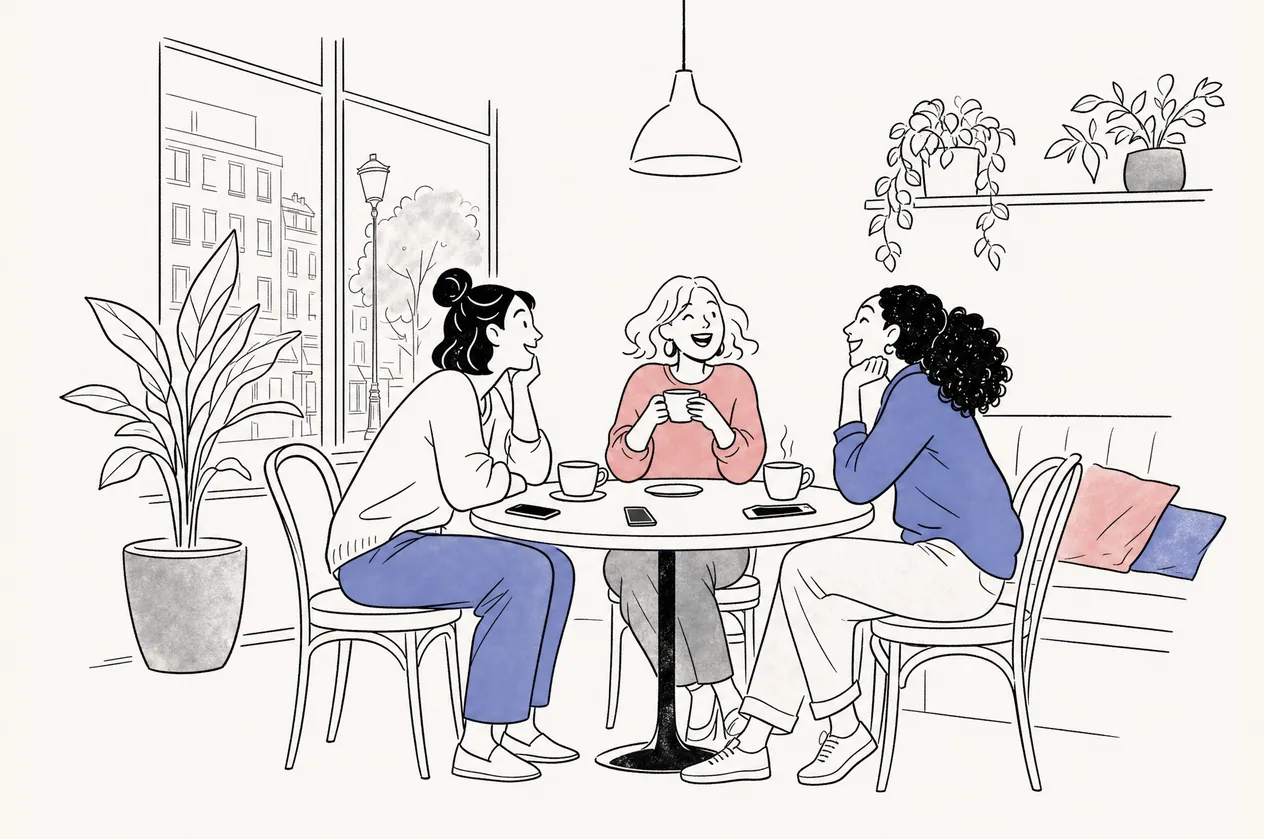
Key points
- About 50 hours together: casual friend; about 90: friend; 200+: close friend.
- Not just time but content matters: conversation, shared activities, support.
- Strong social ties: about 50% higher odds of survival.
- Regularity helps: a weekly meetup or class.
How much time it takes
Communication researcher Jeffrey Hall at the University of Kansas studied adults who had recently moved and students starting college. He estimated that it takes about 50 hours together to move from acquaintance to casual friend, about 90 hours to become a friend and more than 200 hours to become a close friend. Time spent joking, catching up and having meaningful conversations mattered more than time spent working side by side (Hall, 2019).
Why it matters for health
People with stronger social relationships had about 50% higher odds of survival (Holt-Lunstad et al., 2010), and loneliness and isolation are linked to higher mortality (Holt-Lunstad et al., 2015). The U.S. Surgeon General has called loneliness a public health epidemic.
How to build friendships
- Join something that meets regularly: a class, club, team, choir or volunteer group.
- Say yes to invitations and follow up with people you like.
- Suggest a specific plan: “Coffee next Tuesday?”
- Be patient; friendship builds over months.
Frequently asked questions
Why is it harder to make friends as an adult?
Fewer settings bring people together repeatedly and casually, like school did. Creating that regularity helps.
Does online time count?
Some, but in-person time and meaningful conversation were more strongly linked to closeness.
Sources
- Hall (2019). How many hours does it take to make a friend?. Journal of Social and Personal Relationships 36(4):1278-1296. doi:10.1177/0265407518761225
- Holt-Lunstad et al. (2010). Social Relationships and Mortality Risk: A Meta-analytic Review. PLoS Medicine 7(7):e1000316. doi:10.1371/journal.pmed.1000316
- Holt-Lunstad et al. (2015). Loneliness and Social Isolation as Risk Factors for Mortality. Perspectives on Psychological Science 10(2):227-237. doi:10.1177/1745691614568352
Keep reading
Social media and in-person connection: can online replace real relationships?
How heavy social media use is linked to perceived isolation, what experiments found when people limited social media and how to balance online and offline.
Social Connection · Myth or factMyth or fact: introverts do not need social connection
Do introverts do fine alone? What experiments on talking to strangers found and why social connection matters for everyone regardless of temperament.
 Social Connection
Blue Zones: lessons from the world’s longevity hotspots
What the five Blue Zones, including Loma Linda, California, have in common, what Adventist Health Studies confirm and why some longevity claims are criticized.
Related topics from other pillars
 Stress
Music and stress: what meta-analyses show
What a meta-analysis of more than 100 studies found about music, psychological stress, heart rate and cortisol, and how to use music to unwind.
StressSocial support as a buffer against stress
What the classic stress-buffering hypothesis says, how perceived support protects health and why asking for help is a skill.
Social Connection tools
Three-item loneliness scale (UCLA-3)
Three questions used in major U.S. studies of loneliness.
QuizDe Jong Gierveld loneliness scale (6 items)
Measures emotional and social loneliness.
QuizOslo Social Support Scale (OSSS-3)
Three questions about who you can count on.
PDF · WorksheetMy connections map
A worksheet for mapping your social network and planning contact.
PDF · Tracker"One get-together a week" tracker
A monthly tracker of social contact.
PDF · CardsFamily dinner conversation cards
24 questions for phone-free conversation at the table.