Social support as a buffer against stress
StressKey points
- Perceived support, the sense that people will help, is the strongest protection.
- Support softens the impact of stressful events on health.
- Strong social ties: about 50% higher odds of survival.
- Asking for help is a skill, not a weakness.
The buffering hypothesis
In a landmark review, Sheldon Cohen and Thomas Wills concluded that social support protects people from the harmful effects of stressful events, especially when the support matches the need. The strongest protection came from perceived availability of support, knowing that others would help if needed (Cohen & Wills, 1985).
Current evidence
A meta-analysis of 148 studies found that people with stronger social relationships had about 50% higher odds of survival (Holt-Lunstad et al., 2010).
A striking example comes from a Carnegie Mellon study in which 404 healthy adults reported their daily social support and hugs for two weeks and were then exposed to a cold virus. Perceived support and more frequent hugs buffered the link between interpersonal conflict and getting sick (Cohen et al., 2015).
In practice
- Identify two or three people you can call when things are hard.
- Ask for specific help: “Could you pick up the kids on Thursday?”
- Offer support to others; it strengthens relationships.
- Join a group around a shared interest or experience.
Frequently asked questions
What counts as social support?
Emotional support (listening), practical help (a ride, a meal), information and simply companionship.
What if I do not have close friends nearby?
Support groups, faith communities, volunteering and online communities can all provide support.
Sources
- Cohen et al. (1985). Stress, social support, and the buffering hypothesis.. Psychological Bulletin 98(2):310-357. doi:10.1037/0033-2909.98.2.310
- Holt-Lunstad et al. (2010). Social Relationships and Mortality Risk: A Meta-analytic Review. PLoS Medicine 7(7):e1000316. doi:10.1371/journal.pmed.1000316
- Cohen et al. (2015). Does Hugging Provide Stress-Buffering Social Support? A Study of Susceptibility to Upper Respiratory Infection and Illness. Psychological Science 26(2):135-147. doi:10.1177/0956797614559284
Keep reading
Optimism and health: what studies show
What a meta-analysis of 15 studies with 229,000 people found about optimism, heart disease and mortality, and how optimism can be practiced.
 Stress
Tai chi: gentle movement for body and mind
What a BMJ randomized trial found about tai chi for fibromyalgia, how tai chi improves balance and cognition in older adults and how to get started.
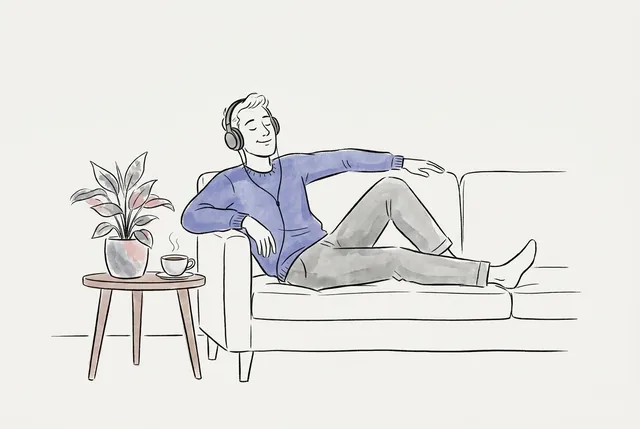 Stress
Music and stress: what meta-analyses show
What a meta-analysis of more than 100 studies found about music, psychological stress, heart rate and cortisol, and how to use music to unwind.
Related topics from other pillars
Couples and health: why relationship quality matters
What a meta-analysis of 126 studies found about marital quality and health, why conflict matters and what keeps relationships healthy.
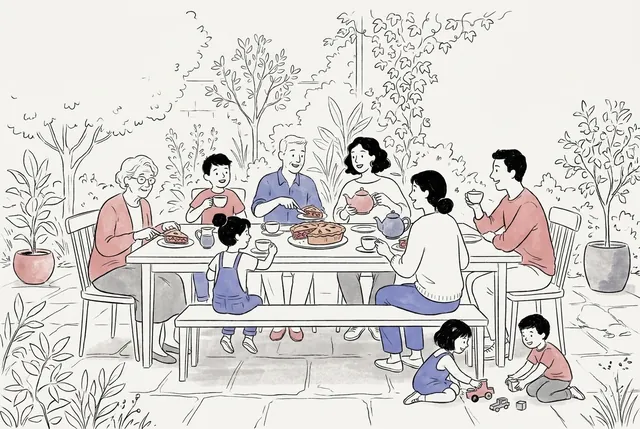 Social Connection · Guide
Social connection and health: why relationships are a pillar of health
How relationships, support and community are linked to longevity and heart health, what meta-analyses show and where to start.
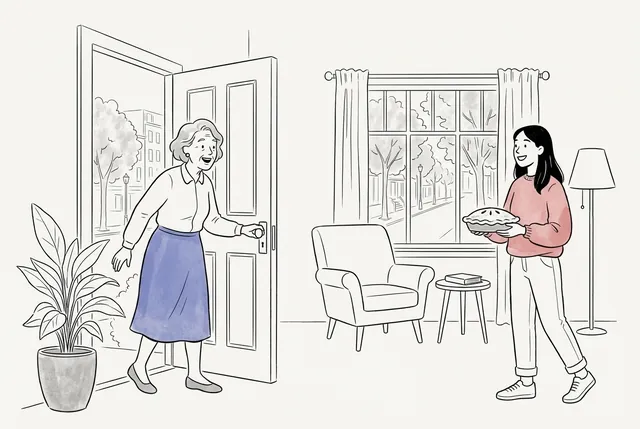 Social Connection
Loneliness as a health risk: what you should know
How loneliness and social isolation are linked to mortality, heart disease and stroke, who is most at risk and what helps.
Stress tools
PHQ-9: depression screening questionnaire
9 questions about your mood over the past 2 weeks, one of the most widely used screening tools in the world.
QuizGAD-7: anxiety screening questionnaire
7 questions about anxiety over the past 2 weeks.
QuizWHO-5 Well-Being Index
5 statements about how you have been feeling over the past 2 weeks.
PDF · TrackerMonthly mood, energy and sleep tracker
Rate your mood, energy, anxiety and sleep daily on a 1–5 scale.
PDF · CardBreathing techniques card
Step-by-step instructions for cyclic sighing, slow breathing and box breathing.
PDF · CardProgressive muscle relaxation: step by step
A guide to 9 muscle groups to practice before bed.