How sleep changes with age and what to do about it
Sleep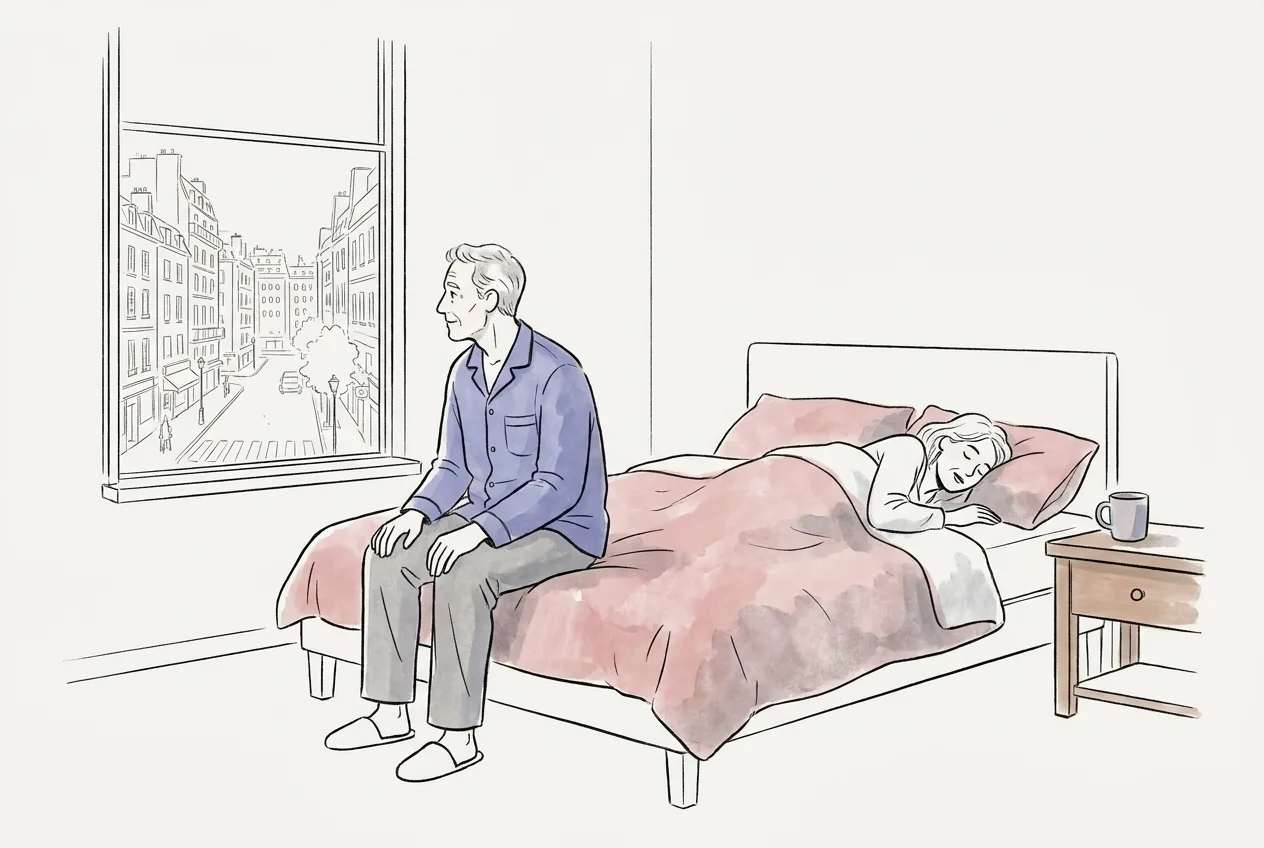
Key points
- Deep sleep decreases and awakenings increase with age.
- Most changes occur before about age 60.
- Adults 65+ are advised to sleep 7 to 8 hours.
- Severe daytime sleepiness or insomnia is not a normal part of aging.
What the research shows
Changes across the lifespan. A meta-analysis of sleep studies in healthy people aged 5 to 102 found that total sleep time, sleep efficiency and deep sleep decline with age, while time awake after falling asleep increases. Most changes occurred by about age 60, with only small changes afterward (Ohayon et al., 2004).
How much to sleep. The National Sleep Foundation recommends 7 to 8 hours for adults 65 and older (Hirshkowitz et al., 2015).
Sleeping pills. A meta-analysis of sedative hypnotics in older adults found that improvements in sleep were small, while the risk of adverse events such as memory problems, daytime fatigue, falls and accidents was significantly higher (Glass et al., 2005).
What helps
- Keep a regular schedule and get outdoor light during the day.
- Stay physically and socially active.
- Limit naps to 20 minutes in the early afternoon.
- Limit caffeine, alcohol and evening fluids.
- Ask about CBT-I for persistent insomnia.
Frequently asked questions
Do older adults need less sleep?
Not much less. Recommendations are 7 to 8 hours for adults 65 and older, compared with 7 to 9 for younger adults.
Are sleeping pills safe for older adults?
A meta-analysis found that the risks, such as falls and memory problems, often outweigh the small benefits. CBT-I is preferred.
Sources
- Ohayon et al. (2004). Meta-Analysis of Quantitative Sleep Parameters From Childhood to Old Age in Healthy Individuals: Developing Normative Sleep Values Across the Human Lifespan. Sleep 27(7):1255-1273. doi:10.1093/sleep/27.7.1255
- Hirshkowitz et al. (2015). National Sleep Foundation’s sleep time duration recommendations: methodology and results summary. Sleep Health 1(1):40-43. doi:10.1016/j.sleh.2014.12.010
- Glass et al. (2005). Sedative hypnotics in older people with insomnia: meta-analysis of risks and benefits. BMJ 331(7526):1169. doi:10.1136/bmj.38623.768588.47
Keep reading
 Sleep
Light and your body clock: how to reset your sleep schedule
Why light is the main signal for your circadian rhythm, what studies show about morning light, camping and evening screens, and how to use light to sleep better.
SleepWaking up at night: what is normal and what is not
Why brief awakenings at night are a normal part of sleep, how they change with age and what to do when you cannot fall back asleep.
SleepSleep and memory: how the brain locks in learning overnight
How deep sleep and REM sleep help consolidate memories and skills, what naps add and why all-nighters before exams backfire.
Related topics from other pillars
Sleeping pills and sedatives: risks you should know
What a BMJ meta-analysis found about sleeping pills in older adults, why risks often outweigh benefits and what guidelines recommend instead.
Risky SubstancesOver-the-counter painkillers: the risks of ibuprofen, naproxen and other NSAIDs
How common over-the-counter NSAIDs are linked to heart attack risk within the first week, other side effects and how to use pain relievers more safely.
Risky SubstancesOpioid painkillers: the risks of addiction and overdose
Why prescription opioids carry high risks of addiction and overdose, how they relate to heroin and fentanyl use, and how naloxone saves lives.
Sleep tools
How much sleep do you need? Recommendations by age
Recommendations from the American Academy of Sleep Medicine and the National Sleep Foundation.
QuizSocial jet lag calculator
The difference in your sleep midpoint between workdays and days off.
QuizWhen should you stop drinking coffee? Calculator
According to a meta-analysis, have a regular coffee at least about 8.8 hours before bed.
PDF · DiaryTwo-week sleep diary
Record bedtime, wake time, awakenings, caffeine, alcohol and how you feel.
PDF · TrackerMonthly 24-hour sleep tracker
A visual sleep rhythm tracker that shows your schedule and social jet lag.
PDF · ChecklistBedtime routine checklist
A step-by-step wind-down routine with a weekly tracker.