Alcohol and sleep: why a nightcap keeps you from resting well
Sleep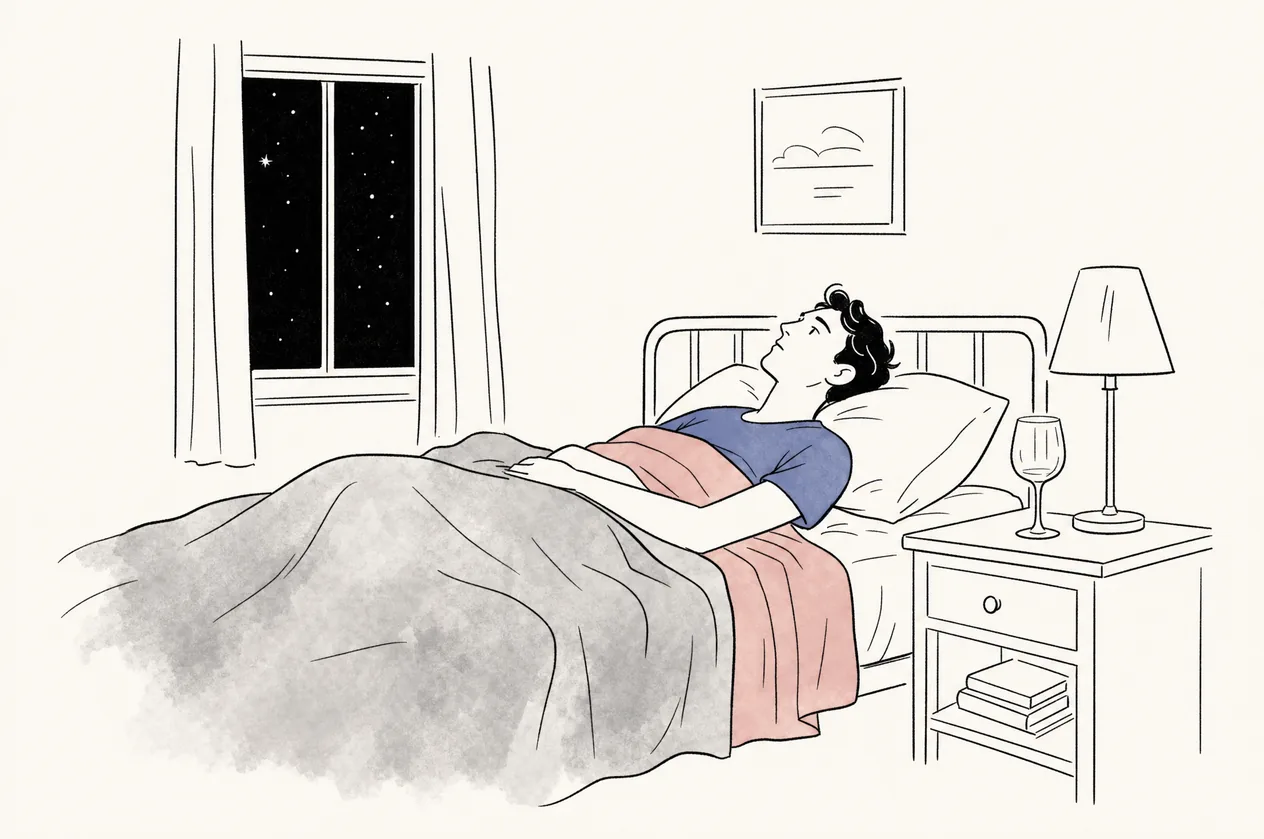
Key points
- Alcohol shortens the time to fall asleep but disrupts sleep later in the night.
- It suppresses REM sleep, which matters for memory and emotions.
- Overnight physiological recovery dropped by about 9% with a low dose, 24% with a moderate dose and 39% with a high dose.
- Alcohol worsens snoring and sleep apnea.
The “nightcap” myth
Many people use a drink to relax and fall asleep. Alcohol is a sedative, so it does make it easier to drift off, but the rest of the night pays the price.
What the research shows
Sleep architecture. A review of 27 studies found that alcohol at all doses shortened the time to fall asleep and deepened sleep in the first half of the night, but disrupted the second half and suppressed REM sleep, especially at higher doses (Ebrahim et al., 2013).
Overnight recovery. In a Finnish study of more than 4,000 people wearing heart rate monitors, alcohol lowered physiological recovery (heart rate variability) during the first 3 hours of sleep by about 9% at low doses, 24% at moderate doses and 39% at high doses (Pietilä et al., 2018).
Other effects
- Alcohol relaxes throat muscles, worsening snoring and sleep apnea.
- It increases trips to the bathroom at night.
- Regular drinking to fall asleep can lead to tolerance and dependence.
What to do instead
Sleep hygiene research supports avoiding alcohol close to bedtime as part of good sleep habits (Irish et al., 2015). Instead, try:
- a nonalcoholic evening ritual: herbal tea, a warm shower, reading;
- relaxation or slow breathing;
- a consistent bedtime and wake time.
Frequently asked questions
Does a single glass of wine affect sleep?
In the Finnish study, even a low dose reduced recovery measured by heart rate variability, although the effect was smaller than with more drinks.
How long before bed should I stop drinking?
Effects depend on the amount. Many sleep experts suggest finishing alcohol at least 3 to 4 hours before bed, and less is better.
Sources
- Ebrahim et al. (2013). Alcohol and Sleep I: Effects on Normal Sleep. Alcoholism: Clinical and Experimental Research 37(4). doi:10.1111/acer.12006
- Pietilä et al. (2018). Acute Effect of Alcohol Intake on Cardiovascular Autonomic Regulation During the First Hours of Sleep in a Large Real-World Sample of Finnish Employees: Observational Study. JMIR Mental Health 5(1):e23. doi:10.2196/mental.9519
- Irish et al. (2015). The role of sleep hygiene in promoting public health: A review of empirical evidence. Sleep Medicine Reviews 22:23-36. doi:10.1016/j.smrv.2014.10.001
Keep reading
 Sleep
Snoring and sleep apnea: when it is dangerous
What obstructive sleep apnea is, how common it is, the STOP warning signs and the treatments that work, from CPAP to weight loss.
Sleep · Myth or factMyth or fact: melatonin is a safe, strong sleep aid
How much melatonin really helps you fall asleep, why supplement doses are unreliable and when melatonin actually makes sense.
 Sleep
Napping: how long to nap for real benefits
Why a 10- to 20-minute nap boosts alertness without grogginess, what experiments show about nap length and the best time of day to nap.
Related topics from other pillars
Alcohol and depression: a vicious circle
Why alcohol can relax you briefly but worsen mood over time, what research shows about alcohol use disorder and depression, and how to break the cycle.
Physical ActivityExercise and sleep: how physical activity helps you sleep
What a meta-analysis of 66 studies found about exercise, sleep duration and sleep quality, and whether evening workouts keep you awake.
Sleep tools
How much sleep do you need? Recommendations by age
Recommendations from the American Academy of Sleep Medicine and the National Sleep Foundation.
QuizSocial jet lag calculator
The difference in your sleep midpoint between workdays and days off.
QuizWhen should you stop drinking coffee? Calculator
According to a meta-analysis, have a regular coffee at least about 8.8 hours before bed.
PDF · DiaryTwo-week sleep diary
Record bedtime, wake time, awakenings, caffeine, alcohol and how you feel.
PDF · TrackerMonthly 24-hour sleep tracker
A visual sleep rhythm tracker that shows your schedule and social jet lag.
PDF · ChecklistBedtime routine checklist
A step-by-step wind-down routine with a weekly tracker.